Everything Under Control 2026
The One Best Way
2025
Mixed-Media Installation
4 Screens, Black MDF, Aluminium, Light Sculpture
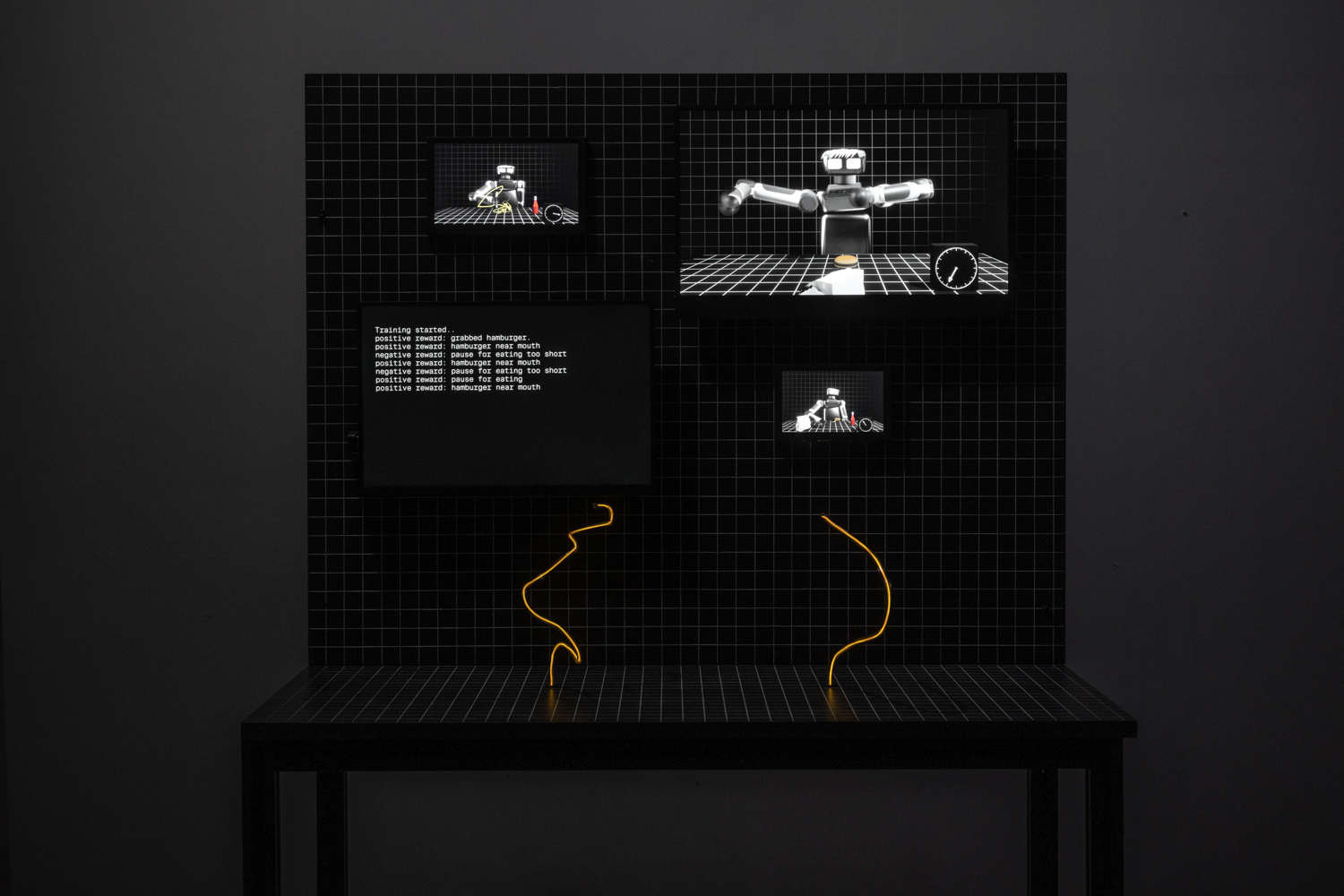
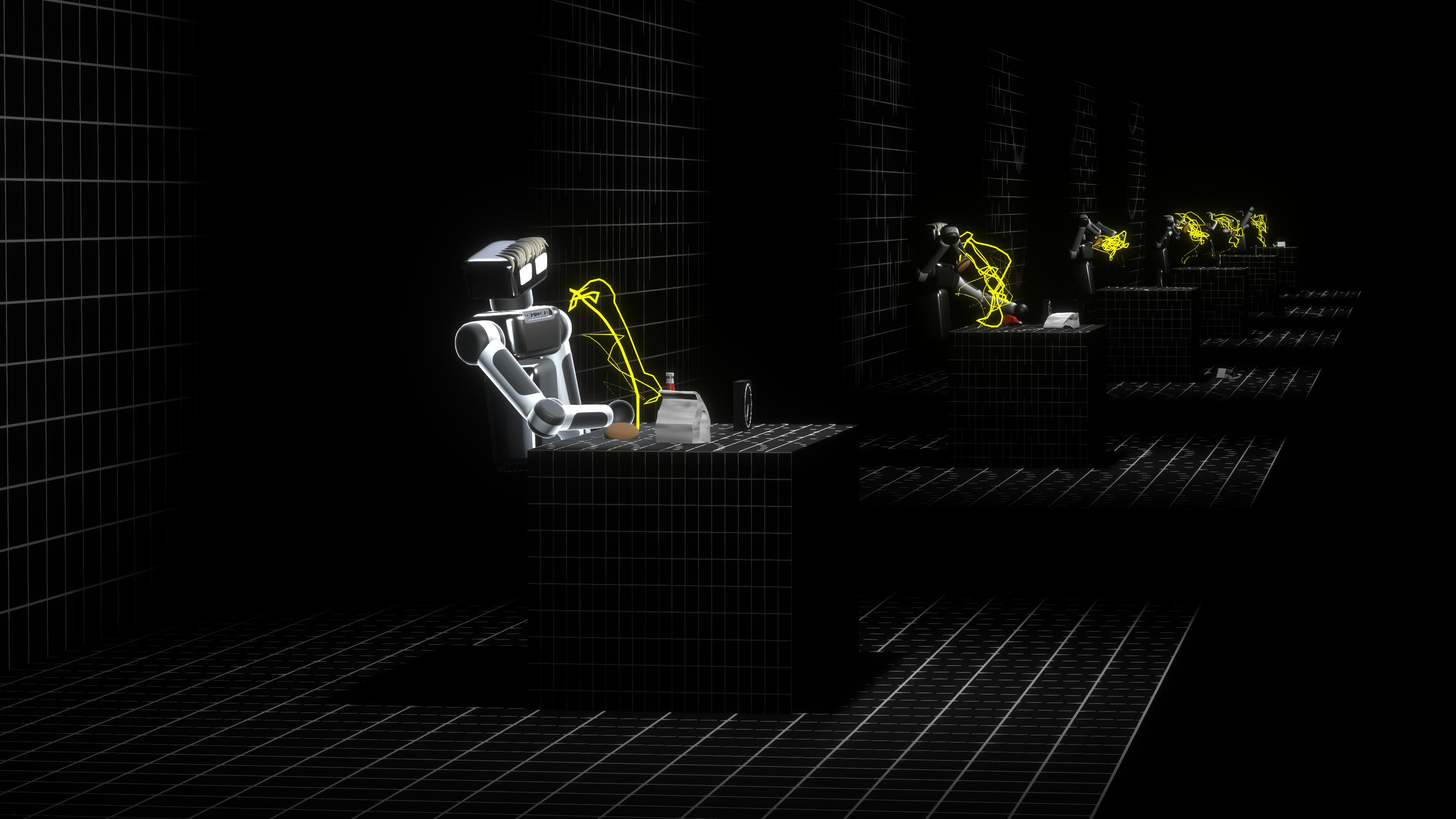
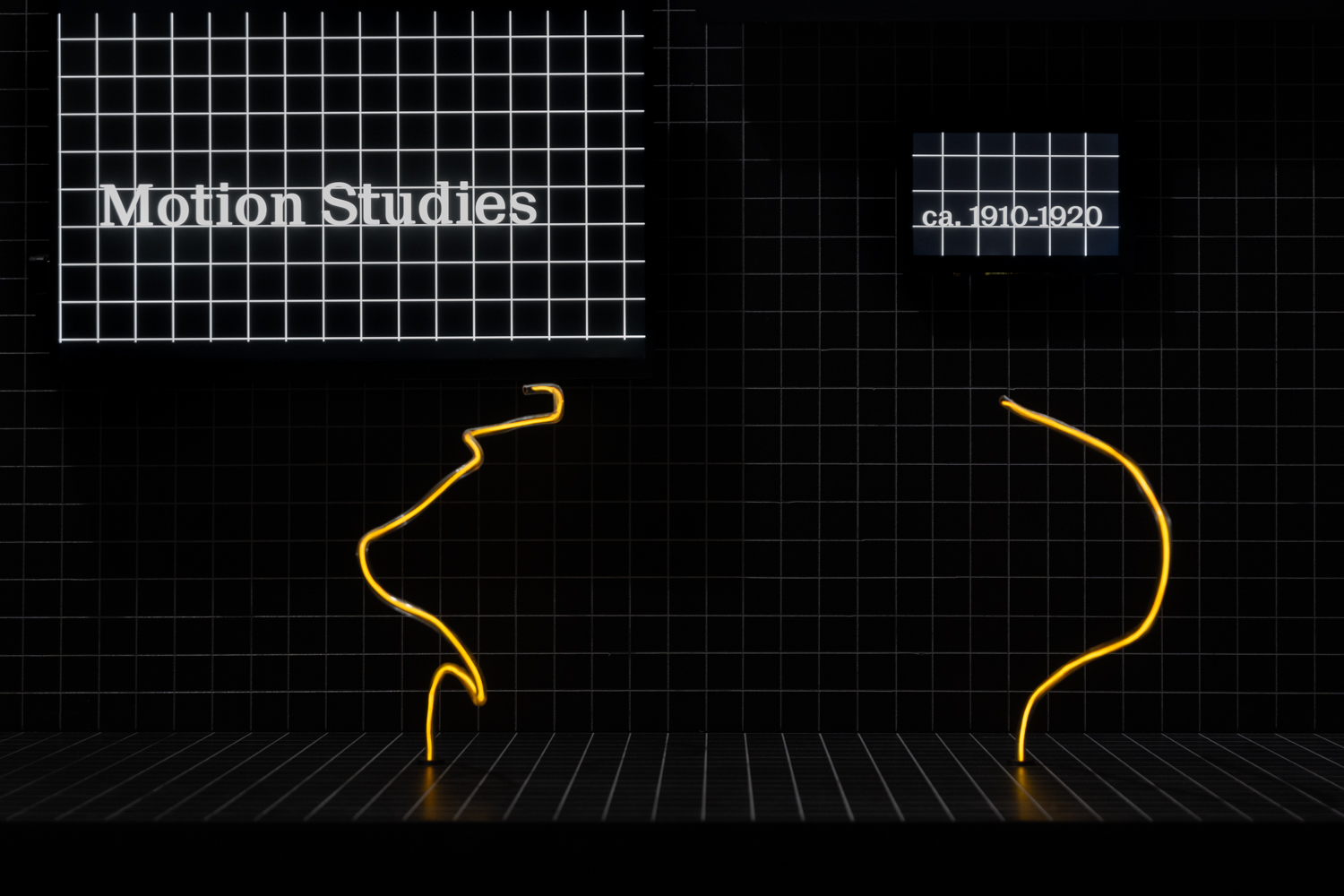
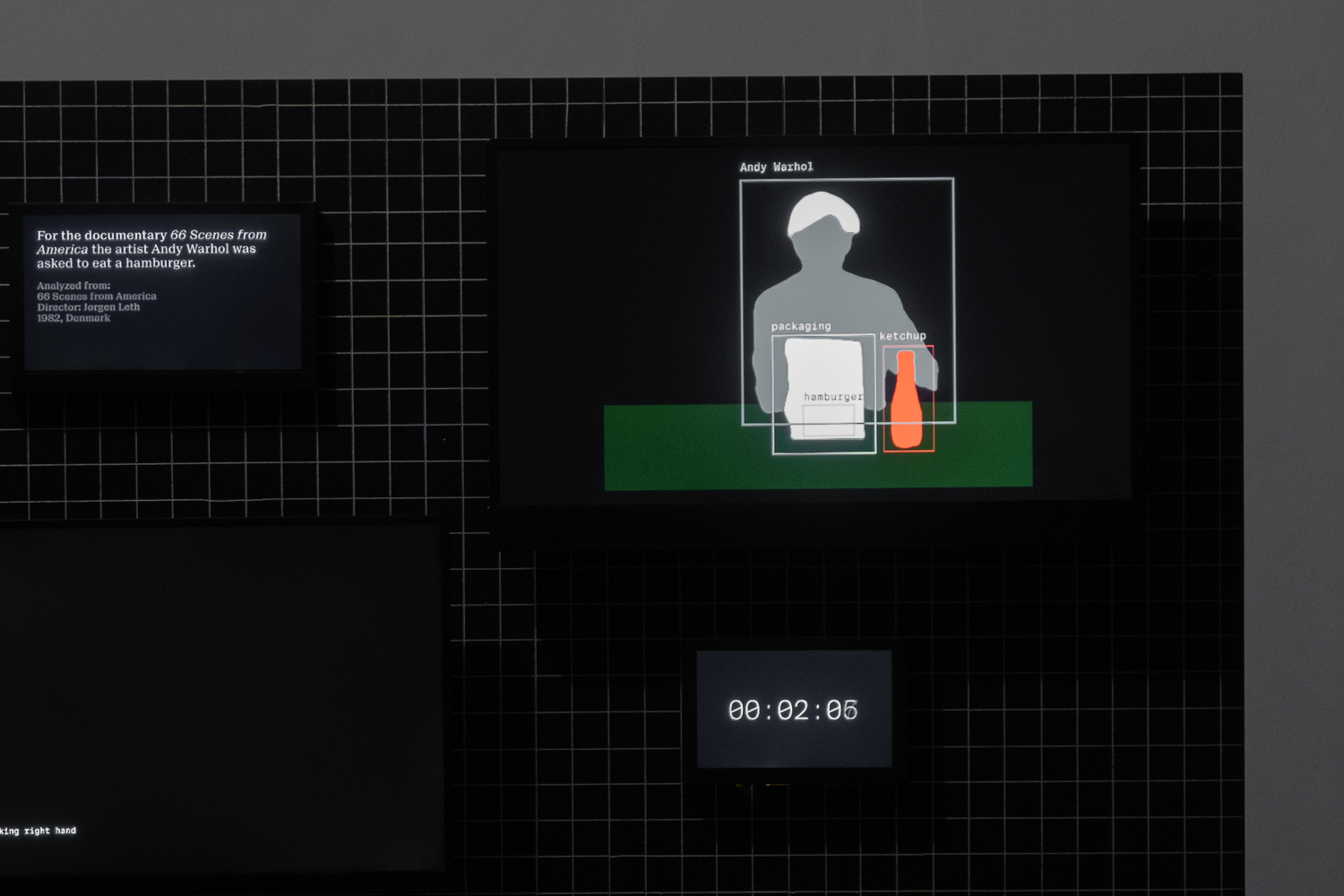
A four-chapter mixed-media installation that traces the historical evolution of labor optimization, revealing how this logic has become a persistent technique of control—from early industrial motion studies to contemporary algorithmic systems. In the early twentieth century, motion studies captured human movement and translated it into wire models that defined the one best way to perform a task. This work revisits these techniques by applying them to film footage of Andy Warhol eating a hamburger, treating the seemingly mundane gesture as a site of measurable, optimizable labor. The installation then shifts to Digital Twin factories—virtual replicas of already existing or planned industrial environments—where work processes are endlessly simulated, monitored, and refined through machine learning. Here, the simulation itself becomes the new one best way, no longer derived from observing workers but prescribing how they should act. By connecting historical motion analysis with contemporary digital simulation, the work critically examines how machine learning and simulated environments extend the logic of optimization into new forms of worker surveillance and control.